Toyota Fluorite: "console-grade" Flutter game engine
fluorite.game135 points by bsimpson 3 hours ago
135 points by bsimpson 3 hours ago
It doesn't say Toyota anywhere on the page and they don't have a link to a repo or anything like that, so I was a little confused. But it is from /that/ Toyota (well, a subsidiary that is making 3d software for their displays) and there was a talk at FOSDEM about it: https://fosdem.org/2026/schedule/event/7ZJJWW-fluorite-game-...
> They use this game engine in the 2026 RAV4
Funny how “game engines” are now car parts in 2026.
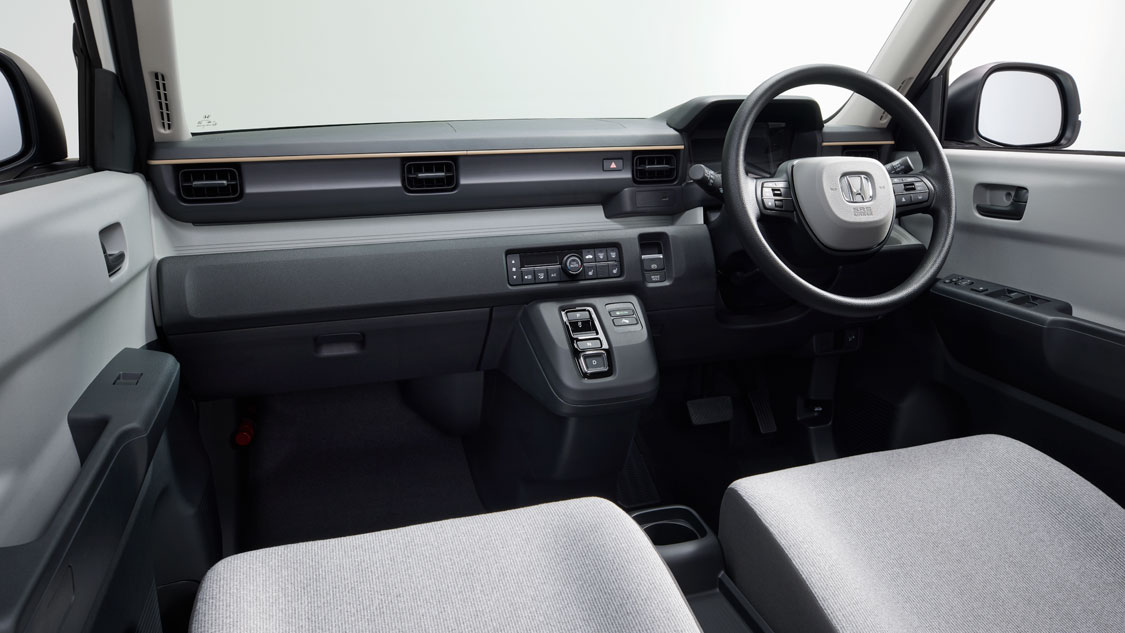
Can I just have an electric car that’s a car and nothing else? Seats, wheels pedals, mirrors, real buttons, no displays just a aux jack. I’d buy it, hell I might even take the risk and pre-order it
> no displays
In the US, no. Backup cameras are required by federal law as of 2018. The intent of the law was to reduce the number of children killed by being backed over because the driver couldn't see them behind the car.
It is crazy how many things are downstream of the structural issue where US regulations favor ginormous SUVs and pickups where this is a problem, but if we introduced legislation to fix this we would end up ruining US automakers which have pivoted almost entirely to this segment alone
While I agree with you that the issue is far worse with larger vehicles, I do find that backing up in my wife's 2011 camry (without a backup camera) feels significantly less safe than I feel backing up my 2017 accord with a backup camera. I'm all for fixing the structural issue you are referring to, but I think the requirement for those cameras is sane in an age where the added cost to the manufacturer is miniscule.
It's not just ginormous SUVs with this problem, though, right? You're not going to see a 18 month old out the back window of your compact hatchback if they're too close to your car. Especially now that windows seem to be tinier than they used to.
No, it's common to all vehicles. You can't see small children behind a small passenger car, either.
Blaming trucks and SUVs for everything is a favorite pasttime of internet comments, but all vehicles benefit from backup cameras and collision detection sensors.
I think the difference is that a 3 year old barely-walking child tends to wander behind moving cars far less often than an 8 year old playing football.
This has nothing to do with SUVs. A 3 year old is difficult to see behind ANY vehicle.
> In the US, no. Backup cameras are required by federal law as of 2018.
Backup cameras are required for new vehicles in a lot of markets: EU, Canada, Japan, and more.
So it's not just a US requirement.
Ah sorry, I quickly edited that out of my comment! I had the video playing while posting, they were talking about a precursor project for embedded Flutter which this in some ways builds on, /that/ is running on the new RAV4.
One of the example uses given in the talk is 3D tutorials, which I could imagine being handy. Not sure I'd want to click on the car parts for it but with the correct affordances I could imagine a potentially useful interface.
> Can I just have an electric car that’s a car and nothing else? Seats, wheels pedals, mirrors, real buttons, no displays just a aux jack. I’d buy it, hell I might even take the risk and pre-order it
You can buy a tubular frame chassis for Beetle-based kit cars from a factory in the south of England, that's been adapted to take modern coilover suspension and an MGF or MGTF engine and gearbox, because Beetles are so rare that anyone wants to put the engine back into a Beetle.
I reckon with a minor amount of fettling you could squeeze a Nissan Leaf transaxle and a sufficient amount of batteries in, and still drop your Manx beach buggy shell over the top. Or any other shell you like.
You'd be running around in a solar-powered beach buggy. THAT is the future.
JPY2690k($17,594) 2025 Honda `N-ONE e:`[0], 12km(7.45 mi), unregistered, 4 passengers, 29.6kWh battery, WLTP 295km(183 mi) of range, pack liquid cooling, has one-pedal, airbags, basic LKAS, rear seat ISOFIX, etc etc[2]
It's like, at least one exists in Japan, on used market even, if you absolutely have to have one, I guess
0: https://www.honda.co.jp/N-ONE-e/webcatalog/design/images/e_g...
1: https://driver-web.jp/articles/gallery/41396/36291
2: https://www.carsensor.net/usedcar/detail/AU6687733258/index.... | https://archive.is/gbBzc
We're all just waiting for the Slate for exactly that reason.
I was hoping it would be under USD 20k including all taxes but now rumors say likely NOT under USD 25k?
A Toyota Corolla starts at $23K. I think the "Under 20" and "Under 30" price points (a la the original Model 3 goal) are simply a thing of the past for any volume car with reasonable demand.
The announced "under $20K" price was including the now-cancelled $7,500 EV subsidy.
It’s a very small market, but yes you can. In Europe, the Citroen Ami is about that. Or the base Dacia Spring.
More expensive cars will have more electronic. They kinda want to sell them.
The "interactive user manual" sounds neat. It probably doesn't need to be part of the car's computer.
Cars should be a USB-C peripheral to a tablet that docks on the dash.
Honestly, I'd be okay with this, and then you can upgrade / replace said tablet if you wanted to. In an Alternate Universe, your iPad drives your car, your iPad Pro drives your car through hell and back, or whatever.
Real buttons are more expensive than electronic. Not sure if you care, but people make that mistake more generally.
Game engines are probably trivially cheap to produce in 2026. You forget that Toyota sells 10M cars per year. In 3 years thats 30M cars. What does it cost each buyer for the game engine? 30 cents?
> Real buttons are more expensive than electronic.
It might add up to a lot of money for the manufacturer who is cranking out thousands or millions of vehicles, but to the consumer buying one car it isn't a meaningful difference.
This is 10 year old outdated, but 10 years ago 1 button was ~1.00. Probably closer to $1.20 or $1.30. But sometimes buttons had 2 buttons on them, Those would go for $2.10-$2.30.
Then you had wiring each button wire I believe was $1. This wasnt 1 wire, but a few wires, power, ground, signal. Each button had them. This wasnt my job, so I didn't follow this price too much, but I asked the question at the time. I think going into the ECU, there is also a cost associated with it.
Anyway, you could assume 10 years ago, each button was $2. A car has 40-70 buttons? So its probably like $100 a car. Maybe $150 or $200 in today's money.
Also buttons and wires break, causing warranty problems.
At the time these vehicles were selling for under $20k at the bottom, and $40k at the top. So 1% of costs were buttons.
This doesn't even include the cost of hiring ~20 engineers to handle the buttons. ~6 people to check appearance and do testing... It doesn't include the assembly costs on the line. That 1% was just the cost of button + wire.
From looking at some new car options lately, it seems like you're lucky if you can get floor mats for $200. This doesn't take away from your point - I suppose I'm just griping.
Sorry - a Verge article about it popped up in my newsfeed, but they're paywalled now. This is what I found when I searched for more info, so I shared it here.
I wonder if a slightly broader search for existing solutions - for instance, https://defold.com - would have shown that quick-startup, 3d-capable, c-integrable, low-end-hardware performant game engines could have been grabbed off the shelf.
That said, this is cool and I would have probably celebrated a similarly fun project in their shoes. Perhaps the real accomplishment here is getting Toyota to employ you to build a new, niche game engine.
This is specifically designed to embed into Flutter apps, which have specific requirements how they interact with the GPU and renderer.
They already tried other engines, such as Unity. The team didn't just go off and build something without trying existing solutions first.
The talk at Fosdem about it https://fosdem.org/2026/schedule/event/7ZJJWW-fluorite-game-...
Filament is not a console grade renderer, not even close. It's architectured around GL. Yes, it can use Vulkan but it's not in any way optimized like a console engine.
For others who were curious like I was: The website doesn't mention "open" or "source" anywhere, but they did give a talk at FOSDEM 2026 about it.
There was a passing comment about "when we open up the GitHub repository" in the talk. So it's not open yet, but they've suggested it might be in the future.
The combination of Flutter + Claude Code makes cross-platform app development really, really fast. I've been impressed with how well Clause handles prompts like, "This list should expand on the web, but not on iOS." I then ask it (Claude) to run both a web instance and an iOS simulator instance. Can usability test in-tandem.
I recently (as in, last night) added WebSockets to my backend, push notifications to my frontend iOS, and notification banner to the webapp. It all kinda just works. Biggest issues have been version-matching across with Django/Gunicorn/Amazon Linux images.
How are you going to maintain all that when you find bugs if it generates a ton of code you did not get through to understand it?
You don't, and as long as you're comfortable with that you keep prompting to dig yourself out of holes.
The problem is unless your ready to waste hours prompting to get something exactly how you want it, instead of spending those few minutes doing it yourself, you start to get complacent for whatever the LLM generated for you.
IMO it feels like being a geriatric handicap, there's literally nothing you can do because of the hundreds or thousands of lines of code that's been generated already, you run into the sunk cost fallacy really fast. No matter what people say about building "hundreds of versions" you're spending time doing so much shit either prompting or spec writing that it might not feel worth getting things exactly right in case it makes you start all over again.
It's literally not as if with the LLM things are literally instantaneous, it takes upwards or 20-30 minutes to "Ralph" through all of your requirements and build.
If you start some of it yourself first and you have an idea about where things are supposed to go it really helps you in your thinking process too, just letting it vibe fully in an empty directory leads to eventual sadness.
Yeah… I wonder how you write complex software without something that looks like a spec, other than slowly. It seems like the prep work is unavoidable, and this contrarian opinion you are offering is just that.
You ask it to fix it.
I've tried fixing some code manually and then reused an agent but it removed my fix.
Once you vibe code, you don't look at the code.
> Once you vibe code, you don't look at the code.
Truly one of the statements of all time. I hope you look at the code, even frontier agents make serious lapses in "judgement".
I loved learning Computer Engineering in college because it de-mystified the black box that was the PC I used growing up. I learned how it worked holistically, from physics to logic gates to processing units to kernels/operating systems to networking/applications.
It's sad to think we may be going backwards and introducing more black boxes, our own apps.
> Once you vibe code, you don't look at the code.
And therein lies the problem
Does it mean it also runs in a browser? Why isn't there a demo?
This definitely looks cool, flutter is still my tool of choice for small apps that aren't games, and I see a big company embrace it warms my soul.
Toyota assuming they move forward with this, might even become the main corporate sponsor since Google appears to be disinterested.
Interesting, they flipped the problem around.
The UI toolkits in game engine usually suck hard, so here they started from a good UI toolkit and made it possible to make relatively performant games.
There's more info at https://www.reddit.com/r/programming/comments/1r0lx9g/fluori...
How is this related to Toyota? Toyota the car manufacturer?
Yes, that Toyota. Looks like it came out of this group. https://www.toyotaconnected.com/about
I'm guessing its used for some of their in-car UIs - unreal engine has found a market (Rivian, Volvo, Ford...) for embedded automotive use now that so many cars display an interactive 3d model to the driver for things like tapping to unlock corresponding door or trunk etc etc.
it'actually Toyota Connected North America, Toyota Motor Corporation's subsidiary founded in collaboration with Microsoft for working on in-vehicle software, AI, and related tech initiatives.
They needed a GUI toolkit for dash display, and didn't really like long engine init time of Unreal/Unity/Godot.
Yes. Had to look it up, but apparently it was developed by TCNA (Toyota Connected North America) which does car software and such.